Introduction
In the current world of technology, very few applications run independently. Regardless of whether you are checking the weather forecast on your mobile, placing an order for food, browsing through social networking sites, or doing some online shopping at an e-commerce site, there are always various systems interacting with one another. REST API is one such technology.
For someone who is just getting into the world of web development, learning about REST APIs will be one of the most important things that they can do. APIs are what make all of today’s digital applications work. Once you know something about APIs, it will help you understand applications better.
What Is a REST API?
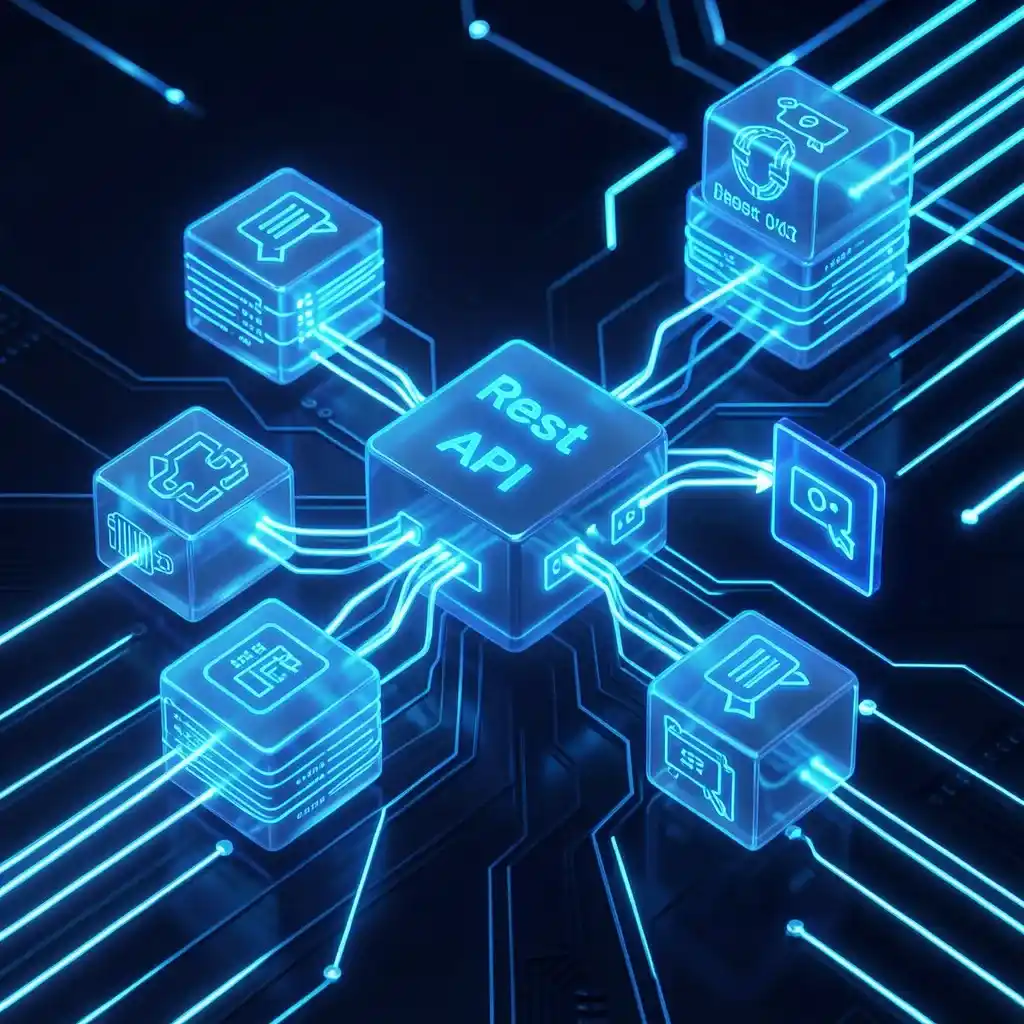
REST represents Representational State Transfer, while API stands for Application Programming Interface. In essence, a REST API refers to an interface that allows different computer programs to communicate with each other through the internet.
Think about going to a restaurant. You do not step into the kitchen and cook your food yourself; instead, you ask the waiter what you would like to eat. The waiter takes your order to the kitchen and then brings your food to your table. Just like that, an API acts as a messenger in this case. Application requests something, and the API passes on this request to another application or server, which then gives back the requested information.
This exchange takes just a few seconds, and it makes everything easy and convenient for the user.
Why Are REST APIs So Important?
The software that exists today relies greatly on APIs. This makes it possible for applications to connect without the need to understand how they are constructed from within.
Consider a few daily life examples:
An application for checking the weather uses APIs to get the latest weather data from weather services. E-payment services use APIs to authenticate transactions. E-commerce sites use APIs to retrieve all product-related details, prices, and stock levels. Social media websites use APIs to show all the status updates, comments, and users’ information. Even an online learning platform cannot do without using APIs to send the coursework to students.
Since APIs are everywhere, professionals who understand APIs are always in high demand.
How Does a REST API Work?
Although APIs seem complex at first, their basic working procedure is rather simple.
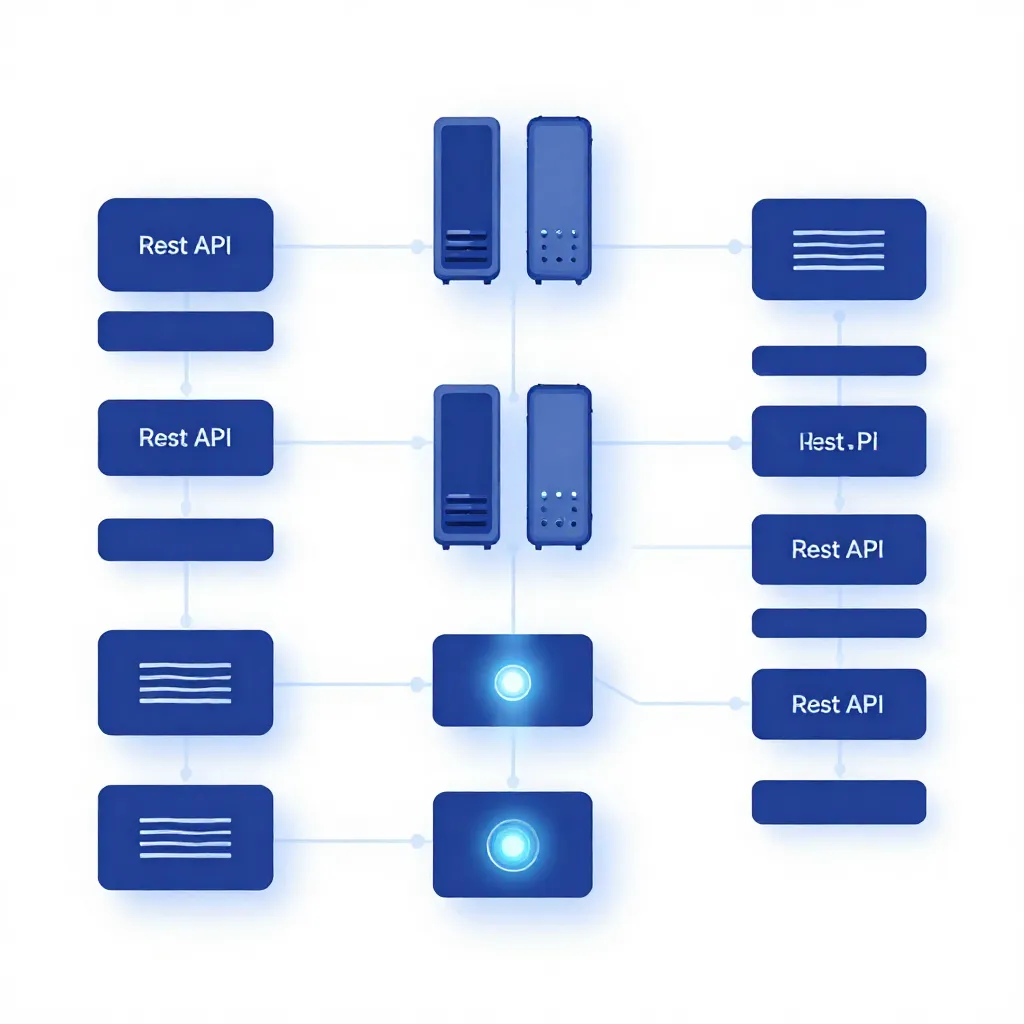
Firstly, a user executes a command, like clicking on a button or filling out a form. After that, the application sends a request to the server using the REST API. The server gets the request, analyzes it, and figures out what information or action it should provide to the client. At last, the server sends the response back to the application, and the result becomes visible to the user.
This process occurs very rapidly, and users do not even have time to notice it.
Understanding HTTP Methods
APIs communicate using HTTP methods. Each method has a specific purpose and tells the server what action should be performed.
GET
The GET method is used when an application wants to retrieve information from the server.
For example, when you browse products on an online shopping website or check your exam results, the application uses a GET request to fetch the required data.
POST
The POST method is used to create new information.
Whenever you register for a new account, submit a contact form, or upload a new blog post, a POST request is responsible for sending that new data to the server.
PUT
The PUT method updates information that already exists.
If you edit your profile, change your email address, or update product details in an inventory system, the application uses a PUT request.
DELETE
The DELETE method removes information from the server.
Deleting an account, removing a product from a shopping cart permanently, or deleting a blog post are all examples of DELETE requests.
These four methods form the foundation of almost every API.
Key Principles
Several key principles of REST architecture ensure its stability and efficiency.
The first of them is stateless communication. In this case, all requests that go to the server are independent of each other. The server does not keep track of previous requests, which improves the system’s scalability and maintenance.
The second one is client-server architecture, according to which the user interface and the server have separate functions. Thus, the developer can work on each part of the application separately.
In addition, REST APIs have a unified interface. Thus, developers follow some consistent standards, which makes development much simpler.
Real-World Uses
REST APIs are all around us, even if we do not realize their presence.
While refreshing your Instagram or Facebook feeds, the application gets new updates from the server by using APIs. E-commerce sites use APIs to list items, make payments, and monitor orders. Food delivery applications use APIs to interact with restaurants, payments, and delivery services. Financial applications use APIs to get bank account balance, payment history, and transaction information. E-learning websites use APIs for managing students’ activities, assignments, quizzes, and classes.
Without APIs, these services would not be able to offer such a seamless experience to users.
Benefits
There are a number of factors that contribute to RESTful APIs being the industrial standard.
The first is the simplicity with which they can be learned and implemented. Bein g based on web standards, they are compatible with virtually any language and system. The lightweight nature of REST APIs enables faster communication, improving application performance.
These APIs also offer high scalability; therefore, companies can handle millions of clients without the need for large-scale modifications in the system. They can be used not only in web applications but in other types of software as well.
How Beginners Can Start Learning REST APIs
It is not difficult to learn APIs. A gradual learning process is very helpful.
First of all, learn about the HTTP protocol and know the meaning of each request method. Then, get acquainted with the structure of JSON and be able to read and write such data. Afterward, experiment with public APIs via the Postman tool.
After mastering the basic concepts, study some backend frameworks, for example, Express.js, Django, and Spring Boot. To finish, create small projects such as a student management system, to-do app, blog, and e-commerce.
Hands-on learning is a good way to feel confident while working with APIs.
REST APIs in Full-Stack Development
If becoming a full-stack developer is the aim, then knowledge of APIs becomes an indispensable part of this process.
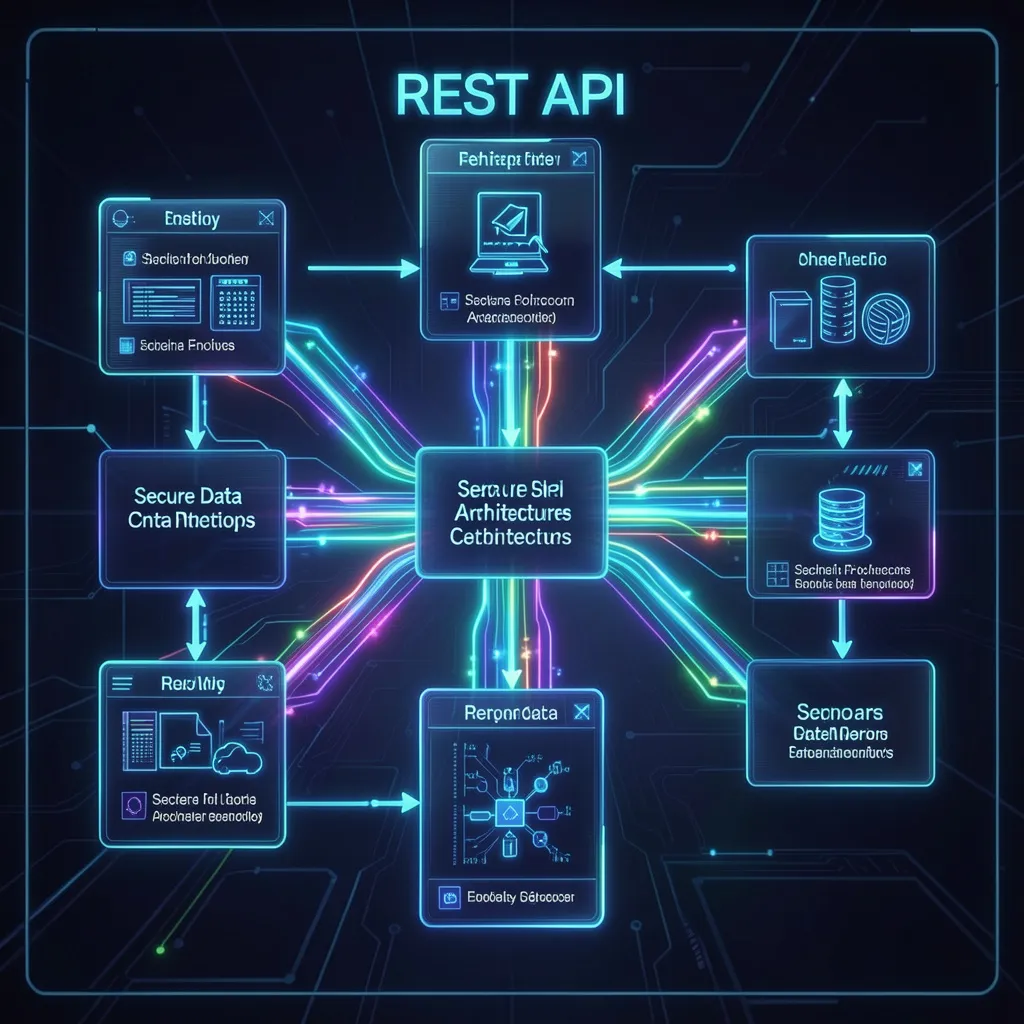
Technologies like MERN Stack and MEAN Stack connect the frontend and backend using APIs. While the frontend uses React/Angular to provide all user interactions and visuals, the backend uses Node.js and Express to process requests, handle databases, and handle business logic.
REST APIs act as a mediator between the two layers, making data transfer possible and secure.
APIs have become an indispensable part of modern web apps, without which they could not work properly.
Conclusion
With the evolution of APIs, software application communication has been taken to the next level. With APIs, it becomes easier and more efficient to share data between websites, mobile applications, cloud platforms, and other online services.
Learning APIs for beginners would be a stepping stone towards software development. It would enable you to learn different HTTP methods, understand JSON, practice using tools such as Postman, and work on mini projects to get the best out of them.
Irrespective of whether you wish to become a backend developer, full-stack developer, or MERN stack developer, REST APIs are going to stay with you always.